
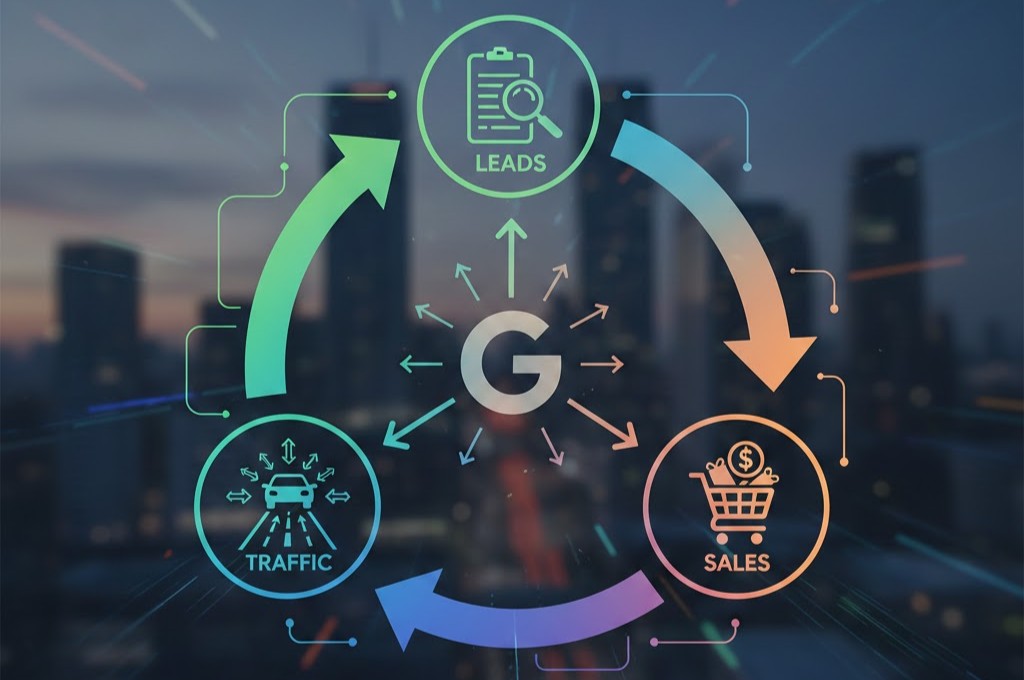
How Google Marketing Objectives Drive Traffic, Leads, and Sales
Many businesses run Google marketing campaigns but fail to see results. The reason is simple: they focus on tools instead of objectives. Google marketing only works when campaigns align with clear, measurable goals.
Google does not reward random activity. Its algorithms prioritize relevance, intent, and performance. When businesses define the right Google marketing objectives, Google understands who to show your brand to, when, and why.
This guide explains how well-defined Google marketing objectives directly drive traffic, leads, and sales, and why businesses that ignore objectives waste budget while competitors grow.
Brand Awareness Objectives Build the Foundation for Traffic Growth Improvement
Brand awareness objectives focus on visibility. Before users click, convert, or buy, they must first recognize your brand. Google marketing supports awareness through Display Ads, YouTube Ads, Discovery campaigns, and broad keyword targeting.
Key awareness tactics include:
High-reach display campaigns
Video ads targeting interest-based audiences
Broad keyword strategies
When businesses focus on awareness objectives, they increase search demand over time. Users start searching for the brand name directly, which lowers future advertising costs and improves organic SEO performance.
This objective matters because customers rarely convert on the first interaction. Awareness builds familiarity, and familiarity builds trust. Without awareness, even the best offer struggles to perform.
Traffic Objectives Attract High-Intent Website Visitors
Traffic objectives aim to bring users to your website. However, not all traffic is valuable. Google marketing allows businesses to attract high-intent users actively searching for solutions.
Effective traffic objectives involve:
Keyword intent targeting
Search network campaigns
Landing page optimization
When traffic objectives align with user intent, visitors stay longer, explore more pages, and engage with content. This signals quality to Google, improving future ad performance and SEO rankings.
Traffic without intent wastes budget. Traffic with intent creates opportunities for leads and sales.
Lead Generation Objectives Turn Visitors Into Prospects
Lead generation objectives focus on capturing contact information from interested users. Google supports this through lead form ads, conversion-optimized search campaigns, and landing pages.
Common lead actions include:
Contact form submissions
Phone calls
Quote requests
Clear lead objectives help Google optimize delivery toward users most likely to convert. As a result, cost per lead decreases while lead quality improves.
Without defined lead objectives, campaigns chase clicks instead of results. With them, businesses build pipelines that support consistent revenue growth.
Sales Objectives Drive Revenue Through Conversion Focus
Sales objectives target direct revenue. These objectives work best for eCommerce, service bookings, and subscription models.
Sales-focused strategies include:
Conversion-optimized search ads
Shopping campaigns
Retargeting users who showed intent
When Google understands that sales matter most, it prioritizes users with strong purchase signals. This leads to higher conversion rates and better ROI.
Businesses that skip sales objectives often struggle to measure success accurately. Clear sales goals ensure every marketing decision supports revenue.
Retargeting Objectives Recover Lost Opportunities
Most users do not convert on their first visit. Retargeting objectives bring them back.
Effective retargeting uses:
Display remarketing
YouTube remarketing
Search retargeting
These objectives work because users already know your brand. Retargeting reminds them, reinforces trust, and removes hesitation.
Without retargeting, businesses lose warm prospects. With it, conversion rates increase significantly.
Local Marketing Objectives Drive High-Conversion Traffic
Local objectives help businesses appear in Maps, local packs, and “near me” searches.
Local objectives include:
Google Business Profile optimization
Location-based search ads
Call-focused campaigns
Local searches often show strong buying intent. Users searching locally usually want immediate solutions.
Businesses with clear local objectives dominate nearby competition and capture ready-to-buy customers.
Engagement Objectives Strengthen Trust and Authority
Engagement objectives focus on how users interact with your brand. Google measures time on site, interactions, video views, and repeat visits.
High engagement tells Google:
Your content is relevant
Your brand is trustworthy
Your pages deserve visibility
Engagement objectives improve long-term performance by strengthening quality signals across ads and organic search.
Data and Measurement Objectives Enable Smarter Decisions
Google marketing works best when objectives connect to data.
Measurement objectives include:
Conversion tracking
Event tracking
Attribution modeling
With accurate data, businesses understand which campaigns generate real value. This prevents wasted spend and supports continuous optimization.
Without measurement, marketing becomes guesswork. With it, growth becomes predictable.
Scaling Objectives Support Long-Term Business Growth
Scaling objectives focus on growth beyond initial success.
Scaling strategies include:
Budget expansion on winning campaigns
Audience expansion
Cross-platform Google strategies
Clear scaling objectives help businesses grow sustainably without sacrificing efficiency.
Strategic Alignment Objectives Prevent Budget Waste
The most important objective aligns all Google marketing efforts with real business goals.
Alignment ensures:
Marketing supports revenue
Campaigns match customer journeys
Every dollar serves a purpose
Businesses without alignment overspend. Businesses with alignment outperform competitors consistently.
FAQs: Google Marketing Objectives
1. What are Google marketing objectives?
They define what a business wants to achieve, such as awareness, traffic, leads, or sales.
2. Can one campaign have multiple objectives?
Yes, but separating objectives improves clarity and performance.
3. Which objective is best for small businesses?
Lead generation and local objectives often work best initially.
4. How long does it take to see results?
Traffic and awareness show fast results; leads and sales improve over weeks.
5. Should objectives change over time?
Yes. Objectives evolve as businesses grow and scale.
Conclusion
Google marketing does not fail—unclear objectives do. When businesses define the right Google marketing objectives, they attract better traffic, generate qualified leads, and increase sales consistently.
At IO Web, we help businesses define, implement, and optimize Google marketing objectives that align with real business goals. Our team combines strategy, data, and execution to turn Google into a powerful growth engine.Stop guessing. Start growing.
👉 Contact IO Web now to build Google marketing strategies that deliver traffic, leads, and sales—consistently and profitably.