
How to Write Website Content That Answers Real Search Intent
How to Write Website Content That Answers Real Search Intent
Every search begins with a question, a need, or a goal. Whether someone is looking for a recipe, comparing products, or seeking professional help, the words they type into a search engine reveal what they truly want. Website content that ignores this underlying purpose may attract traffic but fail to engage readers, earn trust, or drive results.
Many pages rank well yet struggle to convert because they answer the wrong question. They may target a keyword without understanding why people search for it. This is why writing content that answers real search intent has become one of the most valuable skills in digital content strategy.
Content that matches search intent helps visitors find what they need quickly, reduces bounce rates, and signals to search engines that your page is genuinely useful. This guide explains how to identify search intent and write website content that delivers real value to real people.
What Is Search Intent?
Search intent is the underlying purpose behind a person’s online search. It reflects what the user hopes to accomplish when they type a query into a search engine. While keywords describe what someone types, search intent describes why they type it. A person searching for “best running shoes” is not looking for a history of footwear; they want recommendations and comparisons. A person searching for “how to fix a leaking tap” wants practical instructions, not a sales pitch.
During intent analysis, content writers and SEO specialists examine factors such as:
- The exact wording of the query
- Whether the user wants information, a product, or a destination
- The stage of the customer journey
- The format of content currently ranking
- Related questions and follow-up searches
- The user’s likely level of expertise
- The context in which the search occurs
The goal is to determine what type of content will genuinely satisfy the person behind the search. This requires empathy as much as analytical skill. Writers must imagine the person at the keyboard and ask what would make them feel their search was worthwhile.
Why Search Intent Matters
Not every keyword with high volume is valuable, and not every well-written page answers what users actually need. Some content misses the mark because writers focus on keywords rather than the people using them. The result is a page that technically targets a term but fails to deliver on its promise.
Search engines have become increasingly sophisticated at measuring whether users are satisfied. When visitors leave quickly, skip over content, or return to search results, those signals suggest the page did not meet expectations. Over time, this can erode rankings and waste the effort invested in content creation.
Understanding search intent helps content creators:
- Reduce bounce rates
- Improve engagement metrics
- Build reader trust
- Increase conversion potential
- Plan content more strategically
- Avoid wasted effort on mismatched topics
Early intent research often prevents costly content rewrites and lost opportunities. A few hours spent understanding what users want can save days of revision later.
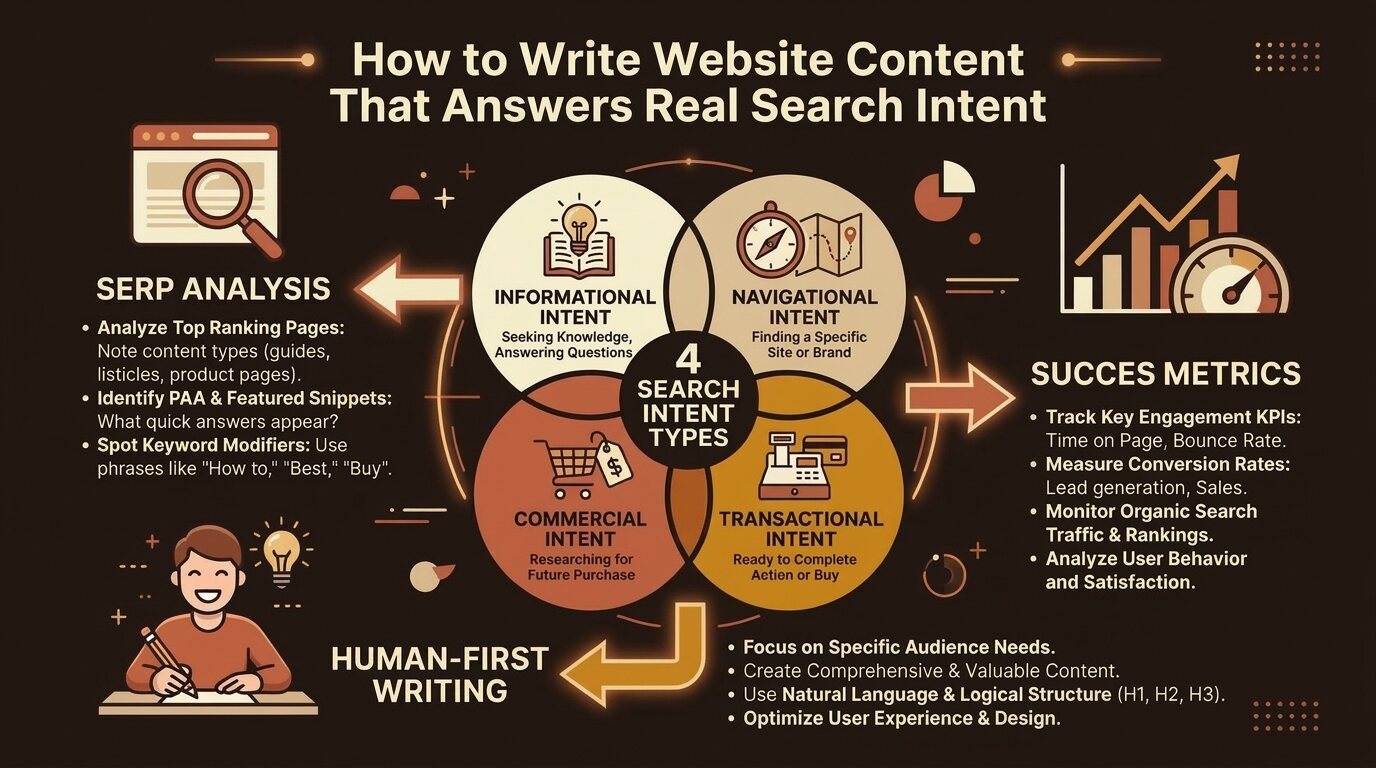
Identifying the Four Main Types of Search Intent
Professional content planning starts with recognizing what users are trying to achieve. Most searches fall into one of four broad categories, though some queries blend elements of more than one.
Common search intent categories include:
- Informational intent, seeking knowledge or answers
- Navigational intent, looking for a specific website or brand
- Commercial intent, researching before a purchase
- Transactional intent, ready to take action or buy
These categories may overlap, but understanding the primary intent helps shape tone, format, and calls to action. For example, an informational query calls for educational content with clear explanations, while a transactional query calls for product pages with pricing, availability, and easy purchase options.
Reading the Signals in Search Results
Search engine results pages reveal what users expect from a query. Before writing a single word, content creators should study the results for their target keyword.
Analyzing the SERP can uncover:
- Dominant content formats
- Featured snippet patterns
- People Also Ask questions
- Related searches
- Video or image results
- Local pack listings
- Shopping results
These signals show what type of content search engines already consider relevant, giving writers a strong starting point. If the top results are all detailed guides, a short blog post is unlikely to satisfy users. If the results are product pages, an informational article may miss the mark entirely.
Matching Content Format to Intent
The right topic with the wrong format can still disappoint readers. A user searching for a quick answer may not want a 3,000-word essay, while a user researching a complex topic may need depth and detail.
Writers should consider whether users need:
- Step-by-step guides
- Comparison articles
- Product pages
- FAQs
- Reviews
- Case studies
- Landing pages
- Tutorials
Choosing the appropriate format improves readability and increases the chance that visitors find what they came for. Format also affects how content is presented in search results, from featured snippets to video carousels.
Writing for People First, Search Engines Second
Content that answers real intent is written for humans, not algorithms. While search engines reward relevance, they ultimately measure relevance through user behavior. Content that satisfies readers tends to perform well over time.
Effective pages often include:
- Clear introductions that confirm relevance
- Direct answers to common questions
- Logical headings and structure
- Practical examples
- Honest recommendations
- Natural keyword usage
- Accessible language
Readers should feel that the page was written specifically for their situation. This sense of relevance encourages them to stay, explore, and return. When content feels generic or overly optimized, readers sense it quickly and move on.
Understanding the Customer Journey
Search intent changes as users move through the buying process. A person who is just beginning to research a topic has different needs from someone who is ready to make a purchase.
Content may need to support:
- Awareness-stage questions
- Consideration-stage comparisons
- Decision-stage evaluations
- Post-purchase support
Mapping content to journey stages helps ensure that every page serves a clear purpose. It also prevents the common mistake of pushing a hard sell to someone who is still learning, or offering basic information to someone who is ready to act.
Using Keyword Research to Reveal Intent
Keywords are more than traffic estimates; they are clues about user needs. The words people choose reveal their priorities, their knowledge level, and their expectations.
Content planners should review:
- Long-tail keyword variations
- Question-based queries
- Modifier words such as “best,” “how,” or “near me”
- Related terms and synonyms
- Search volume trends
- Competitor content gaps
Grouping keywords by intent helps create focused, useful pages instead of scattered topics. A page that tries to serve every possible intent often serves none of them well.
The Role of Content Structure
Well-structured content helps readers scan, understand, and act. Most visitors do not read every word; they skim for the information that matters to them.
Strong structure may include:
- Descriptive headings
- Short paragraphs
- Bullet points for key information
- Summary sections
- Clear calls to action
Structure supports both user experience and search visibility. Headings help search engines understand the page, while clear formatting helps readers find answers quickly. Content that is easy to navigate feels more helpful and is more likely to be shared or bookmarked.
Common Mistakes That Ignore Search Intent
Many content problems stem from overlooking user purpose. These mistakes are common but avoidable.
Frequent mistakes include:
- Keyword stuffing
- Writing for word count instead of value
- Using the wrong content format
- Ignoring follow-up questions
- Overly promotional tone in informational content
- Missing calls to action
- Outdated or incomplete information
Avoiding these errors improves relevance and reader satisfaction. A simple test is to ask whether the page would fully answer a friend’s question on the topic. If not, it probably needs more work.
Measuring Whether Content Meets Intent
Publishing is only the beginning. Content should be reviewed and improved over time as user needs and search behavior evolve.
Useful metrics include:
- Bounce rate
- Time on page
- Scroll depth
- Conversion rate
- Returning visitors
- Search rankings
- User feedback and comments
These signals reveal whether content is truly satisfying the intent behind the search. If visitors leave quickly or fail to act, the content may need clearer answers, better structure, or a different format.
Long-Term Benefits of Intent-Focused Content
Investing in content that answers real search intent provides lasting advantages. It builds a foundation of trust that supports every other marketing effort.
Benefits include:
- Stronger search visibility
- Higher engagement
- Better conversion rates
- Improved brand credibility
- More efficient content planning
- Reduced need for constant rewrites
- Greater audience loyalty
- A more useful website overall
Intent-driven content is often more cost-effective than producing high volumes of low-relevance pages. A smaller library of genuinely helpful content can outperform a large collection of pages that miss the mark.
Choosing the Right Content Approach
When planning website content, consider strategies that offer:
- Thorough intent research
- Clear audience understanding
- Appropriate content formats
- Consistent quality standards
- Regular content audits
- Data-informed updates
- Reader-focused writing practices
Working with a thoughtful content process helps ensure every page serves a purpose. This approach reduces wasted effort and builds a website that users trust and recommend.
Conclusion
Writing website content that answers real search intent is essential for modern digital success. It helps attract the right visitors, improve engagement, and build trust by delivering information people actually need.
Whether for blogs, service pages, product descriptions, or FAQs, intent-focused writing provides value that supports both rankings and reader satisfaction. Combined with thoughtful keyword research, clear structure, and ongoing measurement, content that matches search intent helps grow a website that people return to and recommend.
FAQs
1. What is search intent in content writing?
Search intent is the purpose behind a user’s search query. It describes whether the person wants information, a specific website, product research, or to make a purchase. Content writing that matches search intent delivers what users expect and improves engagement.
2. How do I find the search intent for a keyword?
Review the search results for that keyword. Look at the formats ranking, related questions, featured snippets, and People Also Ask sections. These signals reveal what type of content search engines consider relevant and what users likely expect.
3. Can the same keyword have different intents?
Yes. Some queries can serve multiple intents depending on context. For example, a product name might be searched for information, reviews, or a purchase. Understanding the dominant intent helps determine the best content approach.
4. Why does content that ranks still fail to convert?
Ranking content may attract visitors but miss their intent. If the format, depth, or call to action does not match what users need, they leave quickly. Aligning content with intent improves satisfaction and conversion.
5. What should I do after writing intent-focused content?
Monitor performance metrics such as bounce rate, time on page, and conversions. Update content based on search trends, reader feedback, and changing intent patterns. Continuous review helps content stay relevant and effective.