
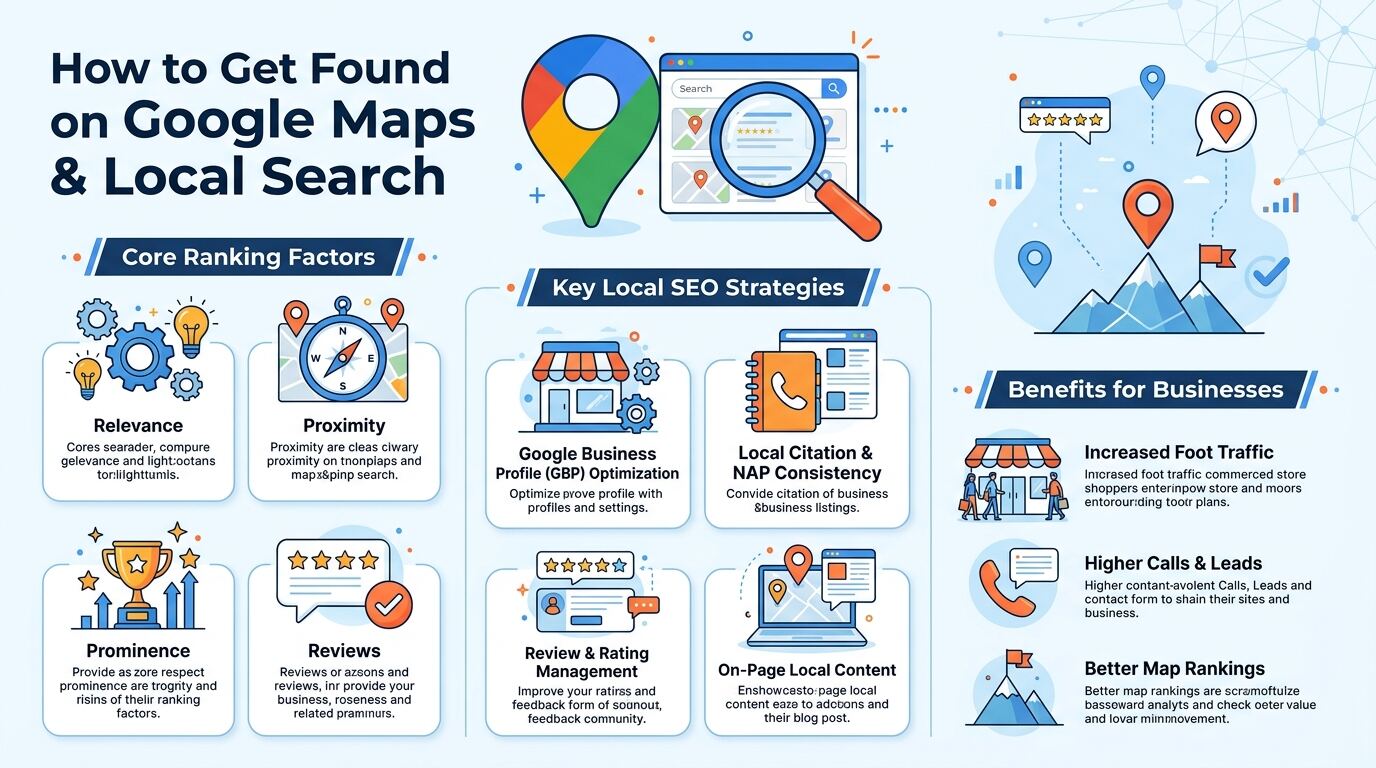
How to Get Found on Google Maps & Local Search
How to Get Found on Google Maps & Local Search
Local search is one of the most powerful ways for businesses to connect with nearby customers. Whether you run a retail store, service company, restaurant, or professional office, appearing in Google Maps and local results can dramatically increase foot traffic, calls, and website visits. Your online presence is often a customer’s first impression.
Most consumers now use “near me” searches. If you don’t appear in top local results, you’re losing customers to optimized competitors. Simply put: if you’re not visible on Google Maps, you’re invisible to a huge segment of your potential customers.
Understanding how to get found on Google Maps and local search is essential for any business serving a geographic area. A strong local search strategy helps customers find you at the moment they’re ready to buy—capturing high-intent leads and driving real growth.
What Is Local Search and Why Does It Matter?
Local search refers to the process search engines use to deliver results based on a user’s geographic location. When someone searches for “coffee shop near me” or “plumber in [city name],” Google uses local search algorithms to display the most relevant businesses in that area. These results appear in what is commonly called the “local pack” or “map pack”—a prominent section at the top of search results featuring three businesses with their ratings, addresses, and contact information.
During a local search, Google evaluates various factors, including:
- Business relevance to the search query
- Proximity of the business to the searcher
- Prominence of the business online
- Accuracy of business information
- Customer reviews and ratings
- Local citation consistency
- Website authority and local content
- Google Business Profile completeness
Google’s algorithm is designed to prioritize businesses that are not only close to the searcher but also highly relevant and well-regarded in their community. This means that simply having a physical location is not enough—you must actively work to signal to Google that your business is a trusted, authoritative choice in your area.
Why Local Search Optimization Is Important
Local SEO is a specialized discipline that requires consistent effort, strategic thinking, and a deep understanding of how search engines evaluate local signals.
Some businesses have strong websites but poor local signals, while others have great reviews but incomplete profiles. The most successful local businesses are those that address all aspects of their online presence—from their Google Business Profile to their website content to their customer review strategy.
Regular local SEO efforts help business owners:
- Increase visibility in Google Maps
- Attract more local customers
- Build trust through reviews
- Outrank local competitors
- Drive more calls and directions
- Improve website traffic from local searches
- Establish a strong online reputation
Early optimization often prevents costly advertising spend later. Businesses that invest in local SEO from the start typically see higher returns on their marketing efforts because they are capturing customers who are already searching for their services.
Identifying Local Search Opportunities
Professional local SEO audits can identify gaps that are difficult to detect without proper tools and experience. Many business owners are unaware of the specific issues that are holding their local rankings back, simply because they do not have the expertise or technology to diagnose the problem.
Common local search opportunities include:
- Incomplete Google Business Profile
- Missing local keywords
- Inconsistent NAP (Name, Address, Phone) data
- Lack of local citations
- Poor review management
- Missing local schema markup
- Weak local landing pages
- Unoptimized images and geotags
These issues may significantly weaken your local ranking even if your website appears professional. For example, an incomplete Google Business Profile might mean you are missing out on valuable visibility in the local pack, while inconsistent NAP data can confuse search engines and dilute your authority.
Protecting Your Business Visibility
Businesses operating in competitive areas require regular monitoring of their local search presence. The local search landscape is constantly changing—competitors are optimizing their profiles, Google is updating its algorithms, and customer expectations are evolving.
Without proper optimization, local businesses may experience:
- Falling behind competitors
- Lost phone calls and leads
- Reduced foot traffic
- Negative review impact
- Incorrect business information displayed
- Lower click-through rates
- Missed revenue opportunities
Professional local SEO strategies help reduce these risks by implementing best practices before visibility drops. Just as a doctor performs regular check-ups to prevent illness, a local SEO specialist monitors your online presence to catch potential issues before they become serious problems.
Supporting Long-Term Local Growth
Local search optimization is not only about ranking in Google Maps. It also helps improve overall digital marketing performance. A well-optimized local presence supports your broader marketing efforts, from your website’s SEO to your social media engagement.
Specialists may recommend:
- Google Business Profile optimization
- Local citation building
- Review generation strategies
- Local keyword research
- On-page SEO for local pages
- Local link building
- Geo-targeted content creation
Strong local signals make your business more visible, credible, and competitive. They also help build a foundation for long-term growth, as the authority you build in local search can positively impact your overall search rankings and online reputation.
The Importance of Regular Local SEO Maintenance
Routine maintenance works together with initial optimization to improve long-term local visibility. Local SEO is not a one-time project—it is an ongoing process that requires consistent attention and updates.
Services may include:
- Updating business hours and information
- Responding to customer reviews
- Posting Google Updates
- Adding new photos and videos
- Monitoring local rankings
- Tracking competitor activity
- Refreshing local citations
Regular maintenance ensures your business stays visible and relevant in local search results. It also helps you adapt to changes in Google’s algorithm and shifts in customer behavior, ensuring that your business remains competitive over time.
Why Reviews and Ratings Increase Local Visibility
Customer reviews are one of the strongest local ranking factors in Google Maps. Positive reviews not only influence potential customers but also signal to Google that your business is trustworthy and reputable.
Positive reviews may lead to:
- Higher Google Maps rankings
- Increased click-through rates
- Greater customer trust
- More phone calls and direction requests
- Improved conversion rates
- Stronger online reputation
A proactive review strategy helps identify opportunities for improvement before negative feedback impacts your ranking. Responding to reviews—both positive and negative—demonstrates to Google and to your customers that you are engaged and care about their experience. This engagement can be a powerful differentiator in competitive local markets.
Commercial Businesses Benefit from Local SEO
Businesses often serve customers located near:
- Office buildings
- Retail centers
- Industrial parks
- Shopping malls
- Hotels
- Schools and universities
Regular local SEO efforts help business owners reduce advertising costs while maintaining a steady flow of local customers. For commercial properties, local SEO is particularly valuable because it targets people who are already in the area and likely to visit in person.
When Should You Focus on Local SEO?
Business owners should consider investing in local SEO when:
- Opening a new business location
- Rebranding or changing address
- Facing increased local competition
- Not appearing in Google Maps
- Receiving few calls from local searches
- Expanding to new service areas
- After a website redesign
Regular optimization is especially important for businesses in high-competition areas. In dense urban markets, the difference between appearing in the top three local results and appearing on the second page can be the difference between thriving and struggling.
Conclusion
Local search optimization is essential for digital marketing—it uncovers visibility gaps, improves online presence, and attracts more local customers before competitors do.
For retail stores, service businesses, restaurants, or professional offices, regular local SEO supports stronger rankings and healthier growth. Combined with Google Business Profile optimization, review management, and citation building when needed, it protects your online reputation while maximizing visibility in Google Maps and local search.
FAQs
1. What is local search optimization?
Local search optimization is the process of improving a business’s visibility in Google Maps and local search results. It involves optimizing your Google Business Profile, building local citations, managing reviews, and creating location-specific content to help potential customers find you when searching for products or services in your area.
2. How long does it take to rank in Google Maps?
The time it takes to rank in Google Maps depends on your industry, competition, and current online presence. Some businesses see improvements within a few weeks, while others may take several months. Consistent optimization, review generation, and citation building are key to long-term success.
3. Can a business rank in Google Maps without a website?
Yes, a business can appear in Google Maps without a website, but having a website significantly improves credibility and ranking potential. A website allows you to target local keywords, create location-specific pages, and provide more information to potential customers.
4. When should I invest in local SEO?
You should consider investing in local SEO if your business is not appearing in Google Maps, receiving few local calls, facing increased competition, or opening a new location. Regular optimization is also recommended as part of a preventive digital marketing plan.
5. What happens after local SEO optimization?
After completing local SEO optimization, you will typically see improved rankings in Google Maps and local search results. Depending on your goals, ongoing efforts may include review management, citation building, content creation, and regular profile updates to maintain and improve your visibility.