
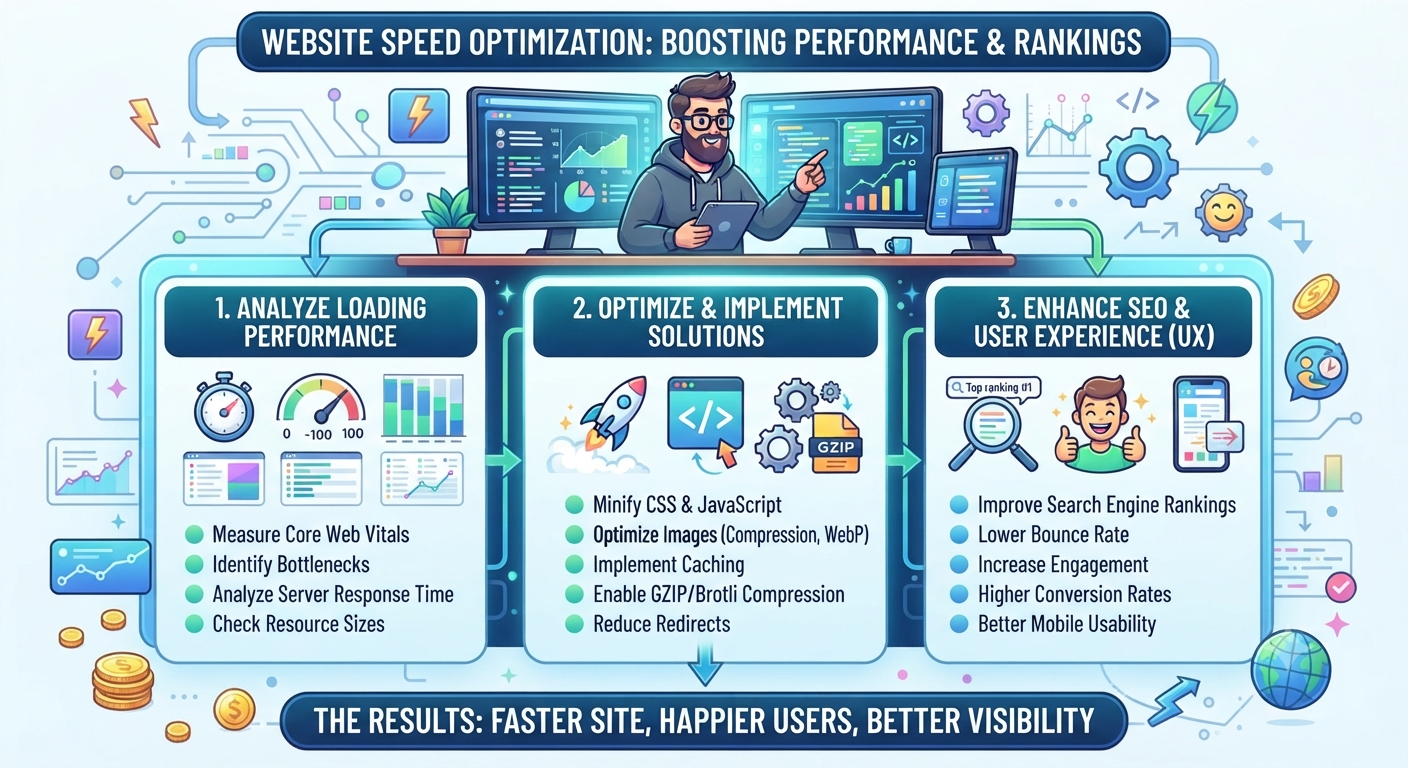
Why Website Speed Optimization Improves SEO and User Experience
Why Website Speed Optimization Improves SEO and User Experience
Website speed has become one of the most important factors affecting how visitors interact with a business website. In today’s digital environment, users expect websites to load quickly, respond smoothly, and provide a seamless browsing experience across all devices.
A slow website can create frustration, increase visitor drop-offs, and reduce the chances of turning visitors into customers. Even if a business has excellent products, valuable content, or strong marketing campaigns, poor website performance can prevent users from taking action.
This is why website speed optimization plays an important role in modern website development and digital marketing strategies. By improving loading speed, businesses can create a better user experience, support SEO performance, and increase opportunities for enquiries and conversions.
Website speed optimization involves improving different technical and design elements of a website to ensure pages load faster and perform more efficiently. From image optimisation and code improvements to better hosting and mobile performance, every improvement contributes to a smoother online experience.
For businesses that rely on their website to attract customers, investing in website speed optimization is no longer optional. It is an essential part of creating a successful and competitive online presence.
What Is Website Speed Optimization?
Website speed optimization is the process of improving a website’s performance so that pages load faster and function more efficiently.
It involves identifying and fixing technical issues that slow down website performance.
Common website speed optimization methods include:
- Compressing large images
- Improving website code
- Reducing unnecessary scripts
- Optimising website files
- Improving server performance
- Using browser caching
- Enhancing mobile responsiveness
The goal is to create a website that loads quickly while maintaining a high-quality user experience.
A professionally optimized website allows visitors to access information faster, navigate pages more easily, and interact with the business without unnecessary delays.
Why Website Speed Matters for User Experience
User experience is one of the most important aspects of website success.
Visitors expect websites to respond quickly when they click links, open pages, submit forms, or browse services. When a website takes too long to load, users may become frustrated and leave before exploring further.
Slow websites often result in:
- Higher bounce rates
- Lower visitor engagement
- Reduced customer trust
- Fewer enquiries
- Poor brand perception
A fast website creates a more positive experience by allowing visitors to find information quickly and complete actions easily.
For example, a potential customer searching for a service may leave a slow website and choose a competitor that provides faster access to information.
Website speed optimization helps businesses avoid losing valuable customers due to poor performance.
How Slow Websites Affect Business Growth
A website is often the first interaction customers have with a business.
If that experience is slow or frustrating, visitors may form a negative impression before they even learn about the company’s products or services.
Slow website performance can affect:
- Customer confidence
- Lead generation
- Online enquiries
- Sales opportunities
- Marketing effectiveness
Businesses often invest heavily in advertising and SEO to attract visitors, but these efforts become less effective if the website cannot provide a smooth browsing experience.
A fast and responsive website helps businesses maximise the value of their online traffic by giving visitors a better chance to engage and convert.
Website Speed and SEO Performance
Website speed is also an important consideration for search engine optimisation.
Search engines aim to provide users with results that deliver helpful and reliable experiences. Website performance can influence how search engines evaluate overall page quality.
A slow website may negatively affect:
- User engagement
- Page experience signals
- Mobile performance
- Search visibility
Optimising website speed supports SEO efforts by creating a better environment for both users and search engines.
While content quality and relevance remain important ranking factors, technical performance helps ensure that visitors can access and interact with website content effectively.
Mobile Website Speed Is More Important Than Ever
Many users now browse websites through smartphones and tablets.
Mobile visitors expect websites to load quickly regardless of their device or internet connection.
A website that performs well on desktop but loads slowly on mobile may lose a significant number of potential customers.
Mobile speed optimization focuses on:
- Responsive website design
- Optimised images
- Faster page loading
- Simple navigation
- Efficient website code
A mobile-friendly website improves accessibility and helps businesses reach more customers who search and browse using mobile devices.
How Image Optimization Improves Website Speed
Images are one of the most common reasons websites become slow.
High-quality images are important for creating attractive websites, but large image files can significantly increase loading times.
Website speed optimization often includes:
- Compressing image file sizes
- Using suitable image formats
- Reducing unnecessary images
- Optimising image dimensions
- Implementing modern image loading techniques
Optimised images allow websites to maintain visual quality while improving performance.
This creates a balance between attractive website design and fast loading speed.
The Connection Between Speed and Conversions
Website visitors are more likely to take action when they have a smooth browsing experience.
A faster website can improve opportunities for:
- Contact form submissions
- Quote requests
- Product purchases
- Consultation bookings
- Service enquiries
When pages load quickly, visitors can move through the customer journey more easily.
Website speed optimization therefore supports not only technical performance but also business growth by helping convert more visitors into customers.
Improving Website Performance Through Technical Optimization
Website speed is influenced by many technical factors behind the scenes. Even a visually attractive website can perform poorly if the underlying technology is not properly optimized.
Professional website developers improve performance by reviewing areas such as:
Website code structure
JavaScript performance
CSS optimisation
Database efficiency
Server response time
Website plugins and integrations
Removing unnecessary technical issues helps websites load faster and operate more smoothly.
A technically optimized website also provides a stronger foundation for future growth because it can handle more visitors and new features without significantly affecting performance.
The Role of Web Hosting in Website Speed
Website hosting plays an important role in determining how quickly a website responds.
A website may still experience slow loading times even after design improvements if the hosting environment is not suitable.
Poor hosting performance may cause:
Slow server response
Longer loading times
Website downtime
Poor user experience
Professional website development considers hosting quality as part of overall website performance.
Choosing the right hosting solution helps ensure websites remain stable, fast, and accessible to visitors.
How Browser Caching Improves Loading Speed
Browser caching allows certain website files to be stored temporarily on a user’s device.
When visitors return to the website, their browser can load some elements faster instead of downloading everything again.
Caching helps improve:
Page loading speed
Returning visitor experience
Website efficiency
Overall performance
Proper caching configuration is one of the common techniques used during website speed optimization.
Reducing Unnecessary Website Elements
Modern websites often include many features such as animations, plugins, tracking tools, and third-party integrations.
While these elements can improve functionality, too many unnecessary features may slow down website performance.
Website optimization involves reviewing:
Unused plugins
Excessive animations
Large scripts
Unnecessary tracking codes
Duplicate website features
A cleaner website structure allows pages to load faster while maintaining important functions.
Why Core Web Vitals Matter
Core Web Vitals are performance measurements introduced by Google to evaluate important aspects of user experience.
They focus on:
Loading performance
Website responsiveness
Visual stability
Optimising website speed contributes to better Core Web Vitals performance by improving how quickly users can view and interact with website content.
Although Core Web Vitals are only one part of SEO, they provide valuable insights into how visitors experience a website.
Website Speed Optimization Supports Digital Marketing
Many businesses invest in digital marketing strategies such as:
SEO campaigns
Google Ads
Social media marketing
Content marketing
However, marketing efforts can be less effective if visitors arrive at a slow website.
A fast website helps businesses get better value from marketing campaigns by:
Keeping visitors engaged
Improving landing page experience
Increasing enquiry opportunities
Supporting better conversion rates
Website speed optimization ensures that marketing traffic has a better chance of producing positive business results.
Signs Your Website Needs Speed Optimization
Businesses should consider website speed improvements if they experience:
Slow page loading
Visitors leaving quickly
Poor mobile performance
Low engagement rates
Slow enquiry forms
Declining conversions
Poor website performance reports
Regular performance checks help identify problems before they negatively affect customers and business growth.
Why Professional Website Optimization Matters
Although some basic improvements can be made independently, achieving strong website performance often requires technical knowledge and experience.
Professional website developers understand how different elements affect speed, usability, and SEO.
Professional optimization services may include:
Website performance audits
Image optimization
Technical improvements
Mobile performance enhancement
Code optimisation
Hosting recommendations
Ongoing website maintenance
Working with experienced professionals helps businesses create websites that are fast, reliable, and designed for long-term success.
Long-Term Benefits of Website Speed Optimization
Investing in website speed optimization provides many long-term advantages.
Benefits include:
✔ Better user experience
✔ Improved SEO support
✔ Faster website loading
✔ Higher visitor engagement
✔ Increased enquiry opportunities
✔ Better mobile performance
✔ Stronger online presence
✔ Improved return on marketing investment
A fast website creates a stronger digital foundation that helps businesses compete more effectively online.
Conclusion
Website speed optimization is an essential part of building a successful modern website. A fast-loading website does more than improve technical performance; it creates a better experience for visitors, supports SEO efforts, and increases the chances of turning website traffic into valuable business enquiries.
Slow websites can negatively affect customer trust, engagement, and conversions. Visitors expect quick access to information, especially when browsing on mobile devices. If a website takes too long to load or responds poorly, potential customers may leave before discovering the products or services a business offers.
By improving elements such as images, code performance, hosting quality, mobile responsiveness, and website structure, businesses can create faster and more reliable online experiences. Website speed optimization also works together with other digital strategies, including SEO, content marketing, and online advertising, to maximise the value of website visitors.
A professionally optimized website helps businesses stay competitive in an increasingly digital marketplace. Whether the goal is generating enquiries, improving customer experience, or strengthening online visibility, investing in website speed is a valuable step towards long-term growth.
FAQs
1. What is website speed optimization?
Website speed optimization is the process of improving a website’s loading performance by reducing technical issues, optimising images, improving code, enhancing hosting performance, and making websites faster and more efficient for visitors.
2. Why is website speed important for SEO?
Website speed affects user experience and overall website performance. Search engines consider page experience and usability when evaluating websites, so improving loading speed can support SEO efforts and help provide a better experience for visitors.
3. How does website speed affect customer enquiries?
A slow website can frustrate visitors and cause them to leave before contacting a business. A faster website makes it easier for users to browse services, complete forms, and take action, increasing opportunities for enquiries.
4. What causes a website to load slowly?
Common causes include large unoptimized images, poor hosting performance, excessive plugins, inefficient code, too many scripts, outdated website technology, and lack of regular maintenance.
5. How can businesses improve website speed?
Businesses can improve website speed through image optimization, code improvements, better hosting, mobile optimization, caching, reducing unnecessary website elements, and working with professional web developers to identify performance issues.