
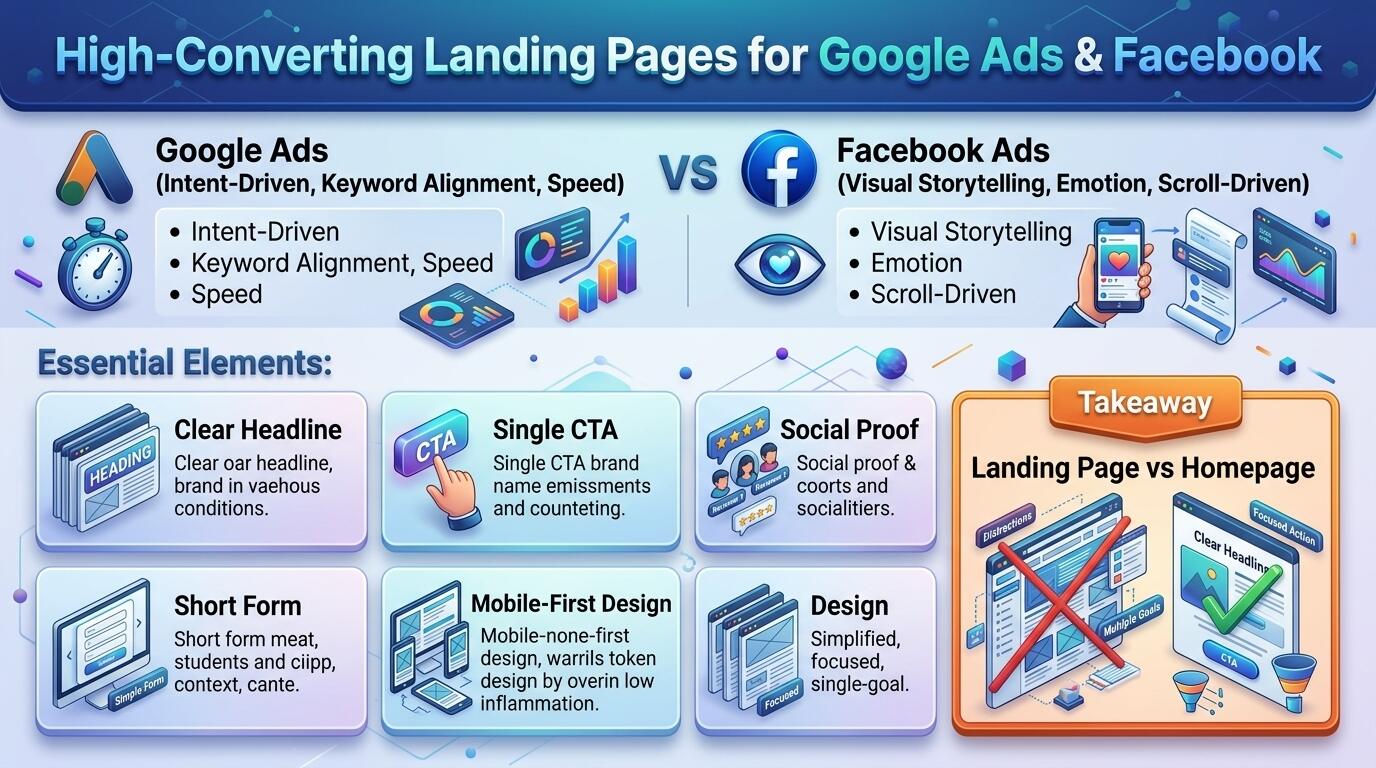
How to Design Landing Pages for Google Ads & Facebook Campaigns
How to Design Landing Pages for Google Ads & Facebook Campaigns
Launching a new business is exciting. You have a product or service you believe in, a brand you have carefully shaped, and big goals for growth. But in 2027, having a great offering is not enough. If your audience cannot find you, trust you, or remember you, even the best business ideas struggle to gain traction.
Social media remains one of the most powerful and cost-effective ways for new businesses to build awareness, attract customers, and create lasting relationships. However, posting randomly and hoping for engagement is not a strategy. Without a clear plan, new businesses waste time, budget, and momentum on content that does not move the needle.
This is why building a structured social media strategy is essential for any new business entering the market. A well-designed strategy helps you focus your efforts, speak directly to the right audience, and measure what actually works, so you can grow with confidence instead of guesswork.
A strong social media strategy helps new businesses identify goals before they start posting, allowing owners and marketing teams to take intentional action through audience research, platform selection, content planning, and consistent performance tracking.
What Is a Social Media Strategy?
A social media strategy is a documented plan that outlines how a business will use social media platforms to achieve specific marketing and business goals.
During strategy development, business owners and marketers examine various factors, including:
- Business goals
- Target audience
- Platform selection
- Content types
- Posting frequency
- Brand voice
- Engagement approach
- Paid promotion
- Analytics and reporting
- Competitor activity
The goal is to determine how social media will support the business, whether that means generating leads, building brand awareness, driving website traffic, or increasing sales.
Why Social Media Strategies Are Important for New Businesses
Not every viral post leads to sales, and not every platform suits every business.
Some marketing efforts appear successful on the surface but fail to generate real business results because they lack clear direction.
A structured social media strategy helps new businesses:
- Build brand recognition
- Attract the right audience
- Generate consistent leads
- Increase website traffic
- Improve customer trust
- Compete with established brands
- Plan content efficiently
Early planning often prevents wasted budgets and inconsistent branding.
Understanding Your Target Audience
Effective social media marketing begins with knowing exactly who you are speaking to.
Professional audience research can uncover insights that are difficult to identify without proper planning.
Common audience research factors include:
- Age and demographics
- Location and language
- Interests and hobbies
- Buying behaviour
- Pain points and challenges
- Preferred platforms
- Content consumption habits
- Online activity times
These insights shape every part of your strategy, from tone of voice to the type of content you create.
Setting Clear Social Media Goals
New businesses often make the mistake of posting without defined objectives.
Without goals, it is impossible to measure success or improve performance.
A strong strategy includes measurable goals such as:
- Increasing brand awareness
- Growing follower count
- Generating leads
- Driving website traffic
- Boosting engagement rates
- Increasing sales conversions
- Building community loyalty
Goals should be specific, time-bound, and aligned with overall business objectives.
Choosing the Right Platforms
Not every social media platform deserves your attention.
In 2027, the platform landscape continues to evolve, and new businesses must be selective about where they invest time and resources.
Popular platforms to consider include:
- TikTok
- YouTube
- X (formerly Twitter)
- Threads
The right choice depends on your audience, industry, content style, and available resources.
Creating a Content Plan That Works
Consistency separates successful social media accounts from forgotten ones.
A content plan helps new businesses stay organised and reduce last-minute stress.
Content categories may include:
- Educational posts
- Behind-the-scenes content
- Customer testimonials
- Product showcases
- Industry news
- Interactive polls and questions
- Short-form video content
- Promotional offers
A balanced mix keeps audiences engaged without overwhelming them with sales messages.
Building a Recognisable Brand Voice
Social media is crowded, and new businesses must stand out.
Your brand voice is how your business sounds across every post, comment, and reply.
Elements of a strong brand voice include:
- Tone and personality
- Language style
- Visual identity
- Values and messaging
- Customer interaction style
A consistent voice builds familiarity and trust, which are essential for new businesses.
The Importance of Consistent Posting
Routine posting works together with strategy to build long-term visibility.
Activities may include:
- Scheduling posts in advance
- Maintaining a content calendar
- Repurposing high-performing content
- Responding to comments promptly
- Monitoring trends and conversations
Consistent activity signals to platforms and audiences that your business is active and reliable.
Why Engagement Matters More Than Followers
Follower count alone does not determine success.
Real growth comes from meaningful interaction with your audience.
Strong engagement may lead to:
- Higher trust from customers
- Increased organic reach
- Stronger brand loyalty
- More word-of-mouth referrals
- Better conversion rates
Businesses that prioritise conversation over vanity metrics often grow faster and more sustainably.
Paid Social Media and New Business Growth
Organic reach is valuable, but paid promotion can accelerate results.
In 2027, smart paid strategies help new businesses compete with larger brands.
Paid social options include:
- Targeted ads
- Retargeting campaigns
- Influencer collaborations
- Sponsored content
- Lead generation forms
When combined with organic content, paid promotion creates a powerful growth engine.
When Should a Social Media Strategy Be Reviewed?
Business owners should consider reviewing their strategy when:
- Engagement begins to drop
- Platform algorithms change
- New competitors appear
- Business goals shift
- Audience behaviour evolves
- New platforms gain popularity
- Campaigns underperform
Regular reviews keep your strategy relevant and effective.
Why Professional Social Media Planning Beats Guesswork
While business owners can post casually, sustainable growth requires strategy and consistency.
Experienced marketers understand:
- Platform algorithms
- Audience psychology
- Content trends
- Advertising tools
- Analytics and reporting
- Brand positioning
They also use specialised tools and follow industry best practices to deliver measurable results.
Professional planning reduces wasted effort and helps businesses make informed marketing decisions.
Long-Term Benefits of a Strong Social Media Strategy
Investing in a well-structured social media strategy provides numerous long-term advantages.
Benefits include:
- Stronger brand recognition
- Consistent lead generation
- Higher customer trust
- Improved marketing efficiency
- Reduced advertising waste
- Loyal online community
- Better competitive positioning
- Greater long-term growth potential
Strategic planning is often more cost-effective than reactive posting after opportunities have been missed.
Choosing the Right Social Media Partner
When selecting a social media agency or consultant, consider providers that offer:
- Experienced strategists
- Comprehensive content planning
- Professional design and video services
- Paid advertising expertise
- Analytics and reporting
- Platform-specific knowledge
- Brand-focused approach
Working with experienced professionals helps ensure your social media efforts are managed safely, strategically, and responsibly.
Conclusion
A strong social media strategy is an essential part of building a successful new business in 2027. It helps attract the right audience, build brand recognition, and generate consistent growth before competitors take the spotlight.
Whether you run a startup, local service, online store, or B2B company, a structured strategy provides valuable direction that supports long-term success. Combined with consistent content, audience engagement, and paid promotion when necessary, a social media strategy helps protect your brand reputation while maximising your marketing investment.
FAQs
1. What is a social media strategy?
A social media strategy is a documented plan that outlines how a business will use social media platforms to achieve specific marketing and business goals. It covers audience research, platform selection, content planning, posting schedules, engagement tactics, and performance measurement.
2. How often should a social media strategy be updated?
The review frequency depends on your industry, platform changes, and business goals. New businesses should review their strategy every three to six months, especially when algorithms change, engagement drops, or new platforms gain traction.
3. Can a new business grow on social media without paid ads?
Yes. Organic growth is possible through consistent posting, strong content, and active engagement. However, paid ads can accelerate results, especially in competitive niches where visibility is harder to earn organically.
4. When should I start building a social media strategy?
You should start before you begin posting consistently. Building a strategy first ensures your branding, content, and goals are aligned from day one, saving time and avoiding inconsistent messaging later.
5. What happens after a social media strategy is created?
After the strategy is finalised, you begin executing the content plan, scheduling posts, engaging with your audience, and tracking performance. Based on analytics, you refine your approach, double down on what works, and adjust what does not to improve results over time.